Fundamentals of an access control system
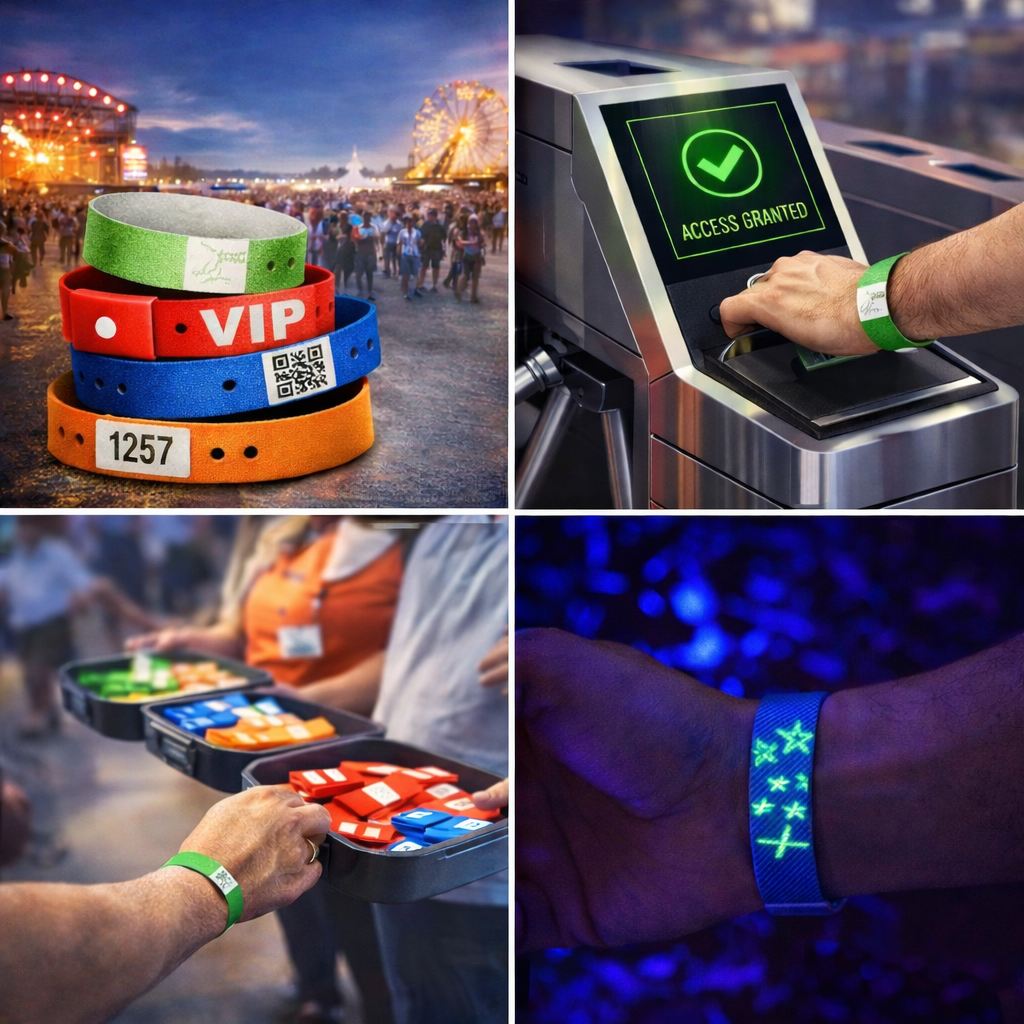
Access control rests on three pillars: identification, entitlement management and physical control. If any of these is weak the whole system becomes fragile. A wristband is not merely an accessory within that structure. It is a visual and physical control tool. It immediately communicates who is entitled to be where and for how long.
Consider arrivals at a 1 000 person event where 60 percent of attendees arrive in the first hour. That means the team must process roughly 600 people in 60 minutes, or an average of 10 people per minute. If each transaction takes six seconds longer than required, those seconds add up to an extra hour of cumulated queuing time across the crowd. Small per-person delays have compound effects on throughput and guest experience.
Choosing wristband types strategically
Choice of wristband should follow event parameters. For single-day corporate events or community fairs a Tyvek wristband is often the best option. It is quick to apply, uses a single-use adhesive, and tears when removed so it cannot be transferred easily. For multi-day events, or where water exposure is likely, a vinyl wristband provides better durability. Textile wristbands are the premium choice for multi-day festivals or brand-focused events where comfort and perceived value matter.
| Consideration | Tyvek | Vinyl | Textile |
| Recommended duration | One day | Two to three days | Multi-day premium events |
| Application speed | Very fast | Fast | Moderate |
| Security level | High | Very high | High |
Beyond base materials you should think about printing, numbering, tamper-evident features and optional technologies such as QR codes, NFC or RFID chips. The additional cost of these features should be weighed against potential losses from unauthorised access.
Cost modelling using example calculations
When estimating costs avoid single-line thinking. Wristbands are one element; a complete cost model also includes staffing, spare stock, losses from ticket fraud, training and logistics. For a paid event of 1 500 attendees a prudent organiser holds at least 10 percent spare wristbands. That equals 150 extra items.
Rather than give a definitive unit price, use example maths. For example, if your supplier charges £0.20 per simple Tyvek wristband then 1 650 bands (1 500 plus 10 percent spare) would cost about £330. Alternatively, if you choose a printed, numbered vinyl wristband with a higher unit price, costs will increase accordingly. The exact price depends on your chosen product and order quantity, so get quotations from suppliers and test samples early.
Security should be modelled as potential revenue protection. Suppose an unauthorised entry rate of 2 percent occurs at a 1 500 capacity ticketed event. That would be 30 unauthorised entrants. If the average ticket price is £80, the potential revenue loss equals 30 multiplied by £80, which is £2 400. In many cases a modest investment in higher security wristbands and control staffing is justified by the avoided revenue loss.
VIP and entitlement structures
Visual differentiation is the simplest, fastest and most reliable control. Different colours for VIPs, distinct markings for crew and separate identifiers for backstage or artist access allow a single glance to confirm entitlement. Alongside colour coding consider adding printed roles or sectors so stewards can act decisively without radio checks.
For higher value entitlements create a clear hierarchy. For example, have a visible VIP wristband, plus a separate laminated pass for backstage and a staff wristband with role printed. This combination reduces the chance of disputes at transition points such as VIP entrances or artist crossings.
Security extras that reduce abuse
Anti-fraud measures come in layers. Unique numbering and sequential serials help with audit trails. UV markings and tamper-evident closures increase the difficulty of reusing bands. Combined checks, such as a wristband plus a scanned ticket or ID check for restricted zones, considerably lower manipulation risk.
For events with high monetised tickets or sensitive access spots, consider integrated technologies. QR codes on wristbands that are scanned at the gate provide a fast, auditable entry record. NFC or RFID-enabled wristbands can open controlled doors or register bar transactions, but these options increase procurement complexity and require compatible hardware and data security plans.
An ordered approach to building the system
Design the system following a sequence that minimises rework. Start by defining event duration and expected peak throughput. Analyse arrival patterns to determine staffing needs at gates. Define entitlement levels and map them to wristband types and colours. Calculate required quantities including minimum spare stock. Finally, integrate visual systems and security extras.
Remember that access control must be a functional spine of the event. It interacts with ticketing, stewarding, medical and production. Plan integration points early to avoid last-minute compromises.
Case studies across different event types
Understanding access control becomes clearer when seen through the lens of specific event types. Here are three typical scenarios showing how decisions differ by context.
Case study 1: 800 person corporate family day
This is a closed site, single-day event with a peak arrival between 09:00 and 11:00. Attendees arrive with children and personal items, which slows processing. Priority criteria here are speed and clear visual identification. If 70 percent of guests arrive in a 90 minute window that is 560 people, equating to an average of more than 6 people per minute and peak loads around 10 per minute.
A Tyvek wristband is an appropriate choice because of rapid application. Use a distinct colour for VIP or special access guests and a different shade for staff. Maintain at least 10 percent spare stock to cover lost or damaged bands.
Case study 2: 2 500 person outdoor concert
For a busy ticketed concert the queue forms early and entry rates can exceed 20 people per minute in the first hour. Speed and security must be balanced. An unauthorised entry rate of 2 percent in this example would equal 50 people. If the average ticket value is £100, that is a potential revenue loss of £5 000. Investing in more durable vinyl bands with unique numbering and additional scanning helps reduce that risk.
Designate separate lanes for pre-ticketed scanners, on-site ticket sales and wristband application to keep throughput high. Add a VIP lane with clear visual markers so high value guests do not congest general entry lines.
Case study 3: Multi-day festival with 5 000 capacity
Multi-day festivals face sweat, water exposure and continuous wear. Durability and daily entitlement separation are key. If average day attendance is 2 000 and the site offers single day tickets plus passes, day-specific colour changes reduce cross-day misuse.
Textile wristbands or premium vinyl with daily printed colours work well. The wristbands also become a tangible brand asset, often retained as a keepsake, which can be leveraged in sponsorship and merchandising plans.
A full cost breakdown to consider
Entry costs are more than raw wristband price. Include staffing hours for the gate, training sessions, courier or shipping of wristbands, replacements on the day, potential losses from ticket fraud, and administrative overheads.
| Item | 1 000 person event | 3 000 person event |
| Wristband material and printing | Varies by selection and quantity | Varies by selection and quantity |
| 10 percent spare stock | Calculated into total order | Calculated into total order |
| Estimated loss from 2 percent unauthorised access | Depends on ticket price | Depends on ticket price |
Use the table above as a framework. Replace the variable cells with your specific numbers to compare the safeguarded cost of stronger controls against the potential cost of unauthorised entries or operational delays.
The psychology of entry and the guest experience
Guests form a view of the event at the gate. A quick, clear and confident process signals professionalism and creates a calm atmosphere. Colour-coded, easily visible wristbands reduce ambiguity. Rapid application and minimal explanation reduce irritation and de-escalate potential conflicts.
Conversely, unclear processes, inconsistent checks or visible arguments at the entry point escalate stress, damage brand reputation and can lead to social media amplification of negative experiences. Treat entry as customer service as well as security.
A decision matrix for organisers
To decide on the right system answer the following: How many days does the event run. What is the expected peak throughput per minute. What is the ticket price and the implied value at risk from unauthorised access. How many entitlement levels do you need. Is water or heavy wear expected. Your answers make the appropriate wristband material and the necessary security features obvious.
For example, if you run a two day event with high ticket prices and peak ingress of more than 15 people per minute, a laminated or vinyl band with unique numbering and scanning should be on the shortlist. If your event is a one day internal company meeting with low guest turnover, Tyvek offers the best balance of speed and security.
Operational considerations and integration
Plan timelines for procurement and testing. Order a range of samples and trial them on site during a rehearsal or at a smaller event. If you opt for QR codes, ensure your scanning hardware is tested with the ticketing provider. If you use RFID or NFC, verify data security and ensure the hardware is rugged and weatherproof.
Staffing is central. Gate teams need clear scripts and escalation routes. Stewards should be trained in the wristband hierarchy and empowered to refuse entry when an entitlement does not match. Run a short training session the day before the event with role play to rehearse peak time scenarios.
Accessibility must be respected. Some attendees will not be able to wear wristbands on their wrist. Have alternatives ready, such as lanyards or discreet laminated cards that afford the same entitlements while respecting dignity and legal requirements.
Contingency planning and incident response
Any mature access control plan contains contingencies. Create a lost wristband policy, a replacement fulfilment station and an incident log. If fraud is suspected document the time, gate and personnel involved and preserve evidence such as physical wristbands or scanned records. Notify your insurance broker if significant abuse occurs and instruct your security team on how to manage crowds during an incident to avoid escalation.
Review your legal and privacy obligations. If you collect personal data at entry or scan identifiable tickets, ensure your processes meet the UK data protection regulations and that data minimisation, retention and access controls are in place.
Summary
In the 2026 event landscape a professional access control system delivers both operational efficiency and competitive advantage. Selecting the correct wristband type, modelling costs realistically and building security features proportionate to the event value prevents revenue loss and protects guest experience. Consider wristbands as part of a holistic system that joins ticketing, stewarding and logistics. Engage suppliers early, test your choices, and train staff thoroughly so the first impression at the gate becomes a lasting positive memory for every attendee.