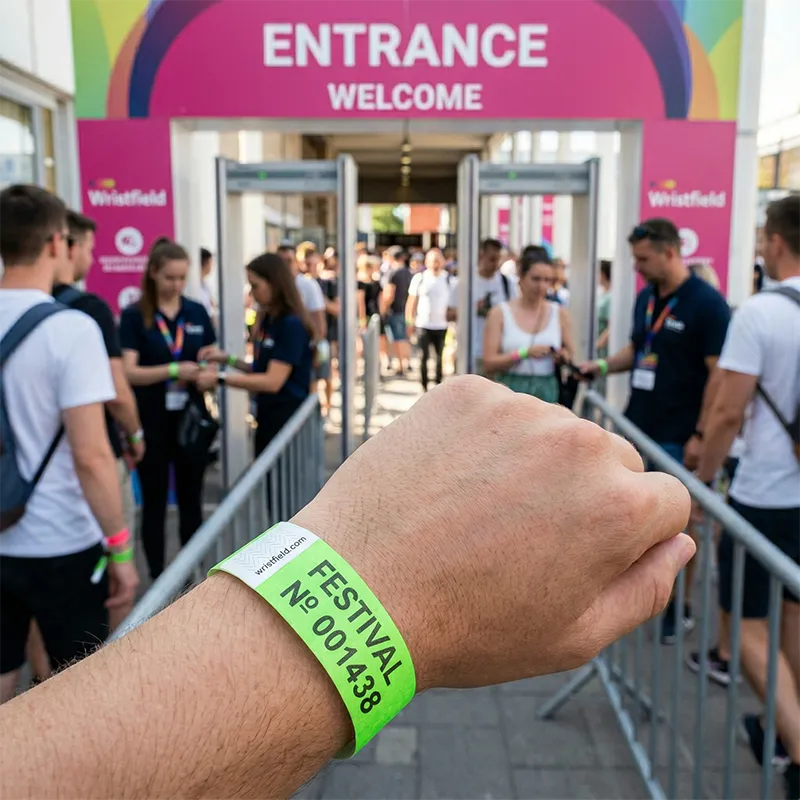
What a numbered wristband means in practice
Numbered wristbands are plain in concept: every wristband issued carries a unique identifier. That identifier can be a simple numeric sequence, a combination of letters and numbers, or combined with a QR code or other printed security device. The crucial point is that the number is not merely decorative - it is part of a register.
When the numbering is treated as an element of record-keeping, the system becomes highly effective. On arrival, guests receive a wristband with a number. That number is recorded alongside any relevant details - it may be logged in a spreadsheet, a ticketing system or a dedicated access control database. From that moment on, movements and entitlements become traceable.
Using wristbands as receipts and audit evidence
One of the most underused functions of numbered wristbands is using them as de facto receipts. To act as a receipt, a wristband should carry a few basic items of information such as date, event name, access category and a unique sequence number.
Consider a midsized outdoor event expecting 2,500 visitors. If you do not control wristband issuance, it is possible for a cashier to hand out unsold wristbands without recording sales. That represents lost income and a breakdown of accountability.
To illustrate with an example calculation, if your ticket price is £25 (example only), and 50 wristbands are handed out without being recorded, you would lose £1,250 in revenue. The exact figure will depend on your ticket price and the scale of the leak, but this example shows how small numbers add up quickly. Properly numbered wristbands let you compare issued ranges against sales records at the end of the day and highlight discrepancies immediately.
Reducing fraud and increasing control
Numbering dramatically reduces the opportunity for opportunistic misuse by both guests and staff. A common abuse is reusing a wristband by passing it to a friend outside the venue. If wristband numbers are linked to a register or a named booking, such reuse becomes easier to spot and investigate.
For higher security requirements - for example VIP access, backstage or staff areas - it is not unusual to associate a number with an identity document at point of issue. That way, if an incident occurs, organisers can determine who was wearing that specific band and act accordingly. Combining a visible number with a hidden security feature such as UV ink or a tamper-evident adhesive creates two layers that are simple for staff to check but difficult to reproduce.
Cost modelling and return on investment
A natural question is whether numbering is worth the cost. The answer depends on event scale and risk profile. Numbering itself adds a small incremental manufacturing cost, but potential savings from preventing revenue loss typically far outweigh that investment.
| Item |
Example value |
| Expected visitors |
2,000 (example) |
| Ticket price |
If ticket price = £20 (example) |
| Maximum potential revenue |
2,000 x £20 = £40,000 (example) |
| Estimated loss without numbering |
2-3% of revenue - example figure |
| Incremental cost to add numbering |
A modest one-off increase per order - varies by material and quantity |
Using the table above as a worked example, a single percentage point of prevented fraud on a mid-sized event can recover the marginal cost of numbered wristbands many times over. Practical costs depend on the type of wristband (paper, vinyl or textile), any additional security printing and quantity ordered. The exact pricing will vary by supplier and order size, so ask for a quote and treat the figures here as illustrative.
A case from a UK event organiser
One regional festival in the UK initially used plain, non-numbered wristbands. The daily capacity was around 1,800 visitors and the organiser noticed a mismatch between sales and physical counts that amounted to several hundred tickets over a weekend. After switching to numbered wristbands combined with a hidden UV mark, the discrepancy fell to a handful of tickets - within normal margin of error.
This shift did not require complex technology. It was a matter of process and a small addition to production. The festival organiser reported that the modest extra expenditure on printed numbering paid for itself in one weekend by eliminating visible revenue leakage and simplifying reconciliation.
Marketing and engagement uses
Numbered wristbands are not only a security tool - they also offer marketing opportunities. Simple prize draws can be built around the numbers: announce a winning number at the end of the day and award prizes to the holder. This encourages guests to keep their wristbands for the duration of the event and enhances the guest experience.
Custom print can be tailored to promote the brand, partner logos or sponsors. While bespoke full-colour printing costs more, it pays back via visibility. Again, precise costs depend on the supplier and the print run size, so plan your creative and request an itemised quote.
A decision matrix for organisers
| Event type |
Recommended wristband |
Is numbering recommended? |
| Small events under 100 attendees |
Tyvek-style single-use band |
Optional |
| Medium events 100-1,000 attendees |
Tyvek or vinyl |
Strongly recommended |
| Festivals and multi-day events 1,000+ attendees |
Textile or heavy-duty vinyl |
Essential |
Common mistakes to avoid
Ordering numbered wristbands is only half of the solution. A frequent error is to treat the printed number as the system itself. If you do not record which numbers are issued and to whom, the number alone has limited value.
Another common mistake is choosing the wrong material. For example, Tyvek-style bands are ideal for single-day events but can fail for multi-day festivals where durability matters. If a band becomes damaged or removable, the numbering control is undermined because the band can be swapped or replaced.
Finally, failing to provide visual differentiation between days or zones can make rapid checks slow. Use a combination of colour coding and numbering to speed up inspections and make it easier for stewards to verify entitlement at a glance.
Production and practical delivery
When ordering, treat numbering as part of production. Reputable suppliers will offer sequential numbering, colour options, tamper-evident closures and additional security features such as UV printing or holographic foils. If you operate on short lead times, discuss express production options. Many suppliers provide a fast-track service for last-minute events; the cost will depend on material and order quantity.
Combining numbering with a hidden security print greatly increases confidence. If you require higher assurance, ask for sample bands ahead of time and test them under event conditions - exposure to water, wrist movement and sunlight can affect different materials in different ways.
Numbering, data and compliance
If you link numbered wristbands to personal data - for example when assigning numbers to named bookings - you create a personal data record and so must consider data protection. In the UK this means applying the principles of the Data Protection Act and the UK GDPR. Keep personal data securely, store it only for as long as necessary and make sure staff understand access limitations.
Simple approaches reduce risk: store only what you need, keep the register offline or in a secure cloud record with restricted access, and delete or anonymise records promptly after the event unless there is a legitimate retention reason such as a safety incident. Include privacy information in your event terms and conditions and brief ticketing staff accordingly.
Operational best practice at the venue
Process design is critical. Decide on an issuing sequence and make it obvious to staff. For events with multiple ticket booths, allocate contiguous blocks of numbers to each booth. For example, one booth might handle numbers 1-500, the next 501-1,000 and so on. Doing this makes it straightforward to reconcile sales by booth and identify where any leakage occurred.
Train staff to check numbers during regular patrols and at access points. Ensure that stewards have a simple mechanism to log problems and to flag suspicious duplicate numbers. Keep procedures short and practical: a veteran steward should be able to verify a wristband in a few seconds.
Integration with ticketing systems and modern tools
Numbered wristbands can be a complementary control alongside electronic ticketing. If your primary sales channel issues barcoded or QR-coded tickets, you might choose to print the barcode on the wristband as well as a human-readable number. The number acts as a visual fail-safe if scanned systems fail or for rapid physical checks by staff who do not carry scanners.
For events that already use CRM or access control platforms, integrate assigned numbers into those systems so that you can produce reports that reconcile tickets sold with wristbands issued. For smaller events, a well-structured spreadsheet will suffice. The important point is to ensure one authoritative record of number issuance exists and is easily auditable.
When numbered wristbands are not enough
Some situations require more sophisticated solutions. Large stadium events or festivals with tens of thousands of visitors often need electronic access control such as RFID or frequent scanning of barcodes. In these circumstances, numbering may still play a valuable supporting role - for instance as a backup when readers malfunction - but should not be relied upon as the sole control.
Similarly, where the risk is primarily multiple re-uses of the same ticket across digital copies, QR- or RFID-based validation may be the better choice. Nevertheless, most events in the 100 to 5,000 attendee range find numbered wristbands to be a cost-effective and practical control with immediate returns.
Training, audits and continuous improvement
Finally, remember that the best system is only as good as the people operating it. Run short training sessions and role plays for ticket sellers, stewards and supervisors. Conduct simple audits during the event: spot checks on wristband numbers, reconciliation of sold tickets to issued number ranges and post-event reviews. Capture any incidents and update your standard operating procedures accordingly. Over time these small improvements produce strong, repeatable results and make numbered wristbands a core part of your event operational toolkit.
Numbered wristbands are not a luxury. They are a simple, effective and affordable management tool that brings immediate benefits to security, financial control and guest experience. When implemented as part of a clear process - with numbering linked to records, staff training and the right material choices - they quickly repay their cost and become indispensable to professional event management.