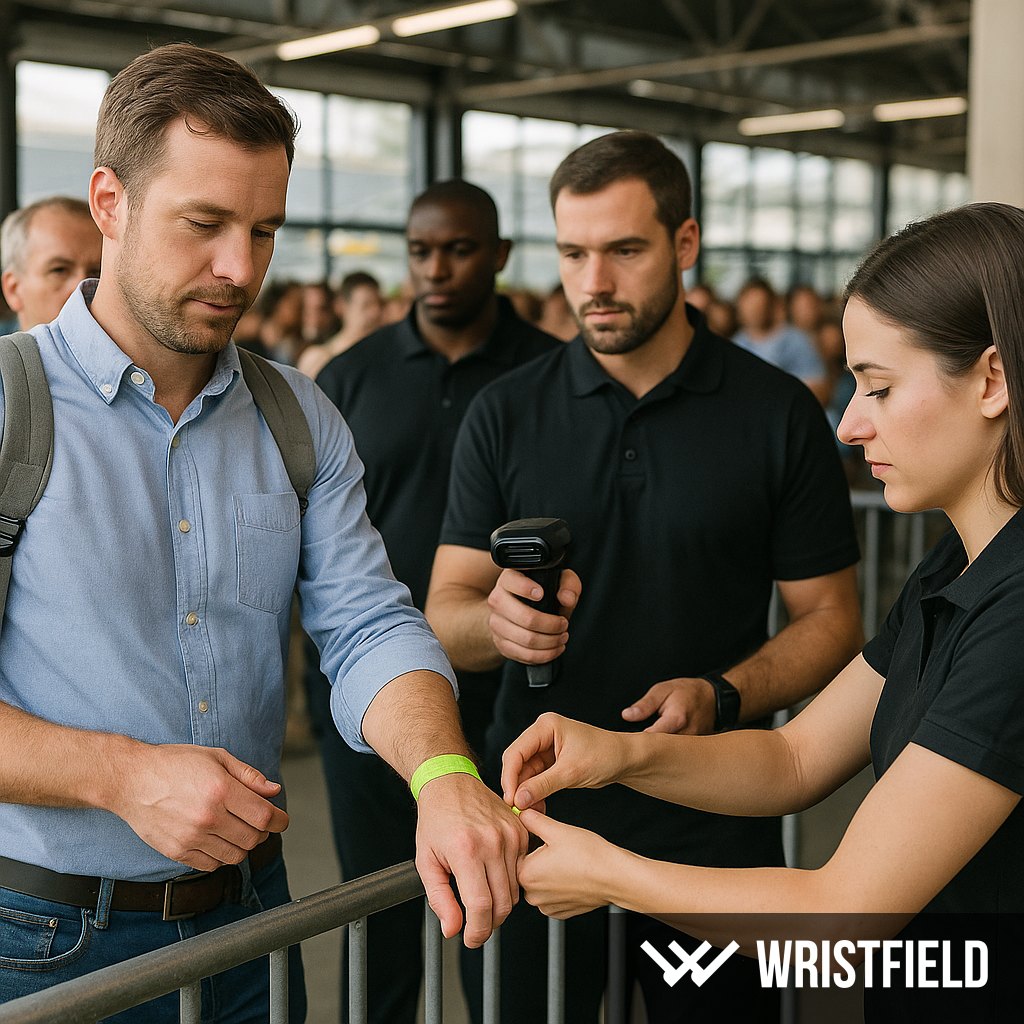
Event entry system case studies
These five case studies are written for event professionals who need clear, operational guidance for entry systems. For each event type we show the context, critical decision points, the main risks and how to mitigate them, and a conditional cost logic so you can adapt the numbers to your own budget. Where helpful, links point to deeper, UK-focused articles covering throughput modelling, UV varnish, numbered wristbands and full cost breakdowns.
Structure: what each case study contains
Each case study briefly describes the venue and audience, lists the practical decision points, identifies the key risks and mitigations, and outlines the cost logic with suggested reserve levels. The aim is to help you decide where to spend and where to save without repeating the same material across event types.
Important note on UV varnish
Where the text references UV varnish, we mean a varnish that is visible only under UV light and applied as a lacquer to a wristband. This is not the same as UV digital printing. UV varnish gives a discreet security mark that is harder to counterfeit and is checked with a UV lamp at entry or at VIP checks. For a practical, UK-focused guide on using UV varnish, see this article: UV varnish for wristbands: a practical guide.
1. Corporate event - 400 delegates, half-day conference and reception
Context: indoor conference venue with a staffed registration desk, VIP guests and a premium look expected. The primary goals are swift registration and clear, discreet entitlement control for VIP catering and backstage access.
Decision points
Choose a premium textile or vinyl wristband if presentation matters. Numbered wristbands help accountability for guest lists and reconciliations. Use UV varnish for VIP or catering entitlements because it is discreet and more difficult to replicate. If you use digital pre-registration, consider adding QR codes to wristbands as a backup option.
Risks and mitigation
Risk of counterfeits is relatively low in controlled corporate settings, but VIP misuse can occur. Numbering plus UV varnish add low-cost deterrents. Keep a dedicated VIP registration lane and an offline contingency for checking guest lists if networking is flaky.
Cost logic
For 400 attendees, order a small buffer (for example 5-10 percent extra) to allow for misprints and walk-ups. The incremental cost of numbering or a UV varnish stamp is modest compared with the event budget but provides a clear control benefit. If optics are key, the premium wristband cost is usually justified by brand impression.
Practical tip
Run a separate quick-check desk for VIPs and delegates with pre-printed lists and wristbands ready to avoid queuing at the main registration.
2. 3,000-person pop concert - outdoor arena, evening
Context: high arrival rate, minimal time per attendee at entry and sustained throughput required. Primary objectives are speed of entry and pragmatic counterfeit mitigation for backstage and VIP zones.
Decision points
Prioritise fast, single-use wristbands such as Tyvek or single-use vinyl for the general public. Use numbered wristbands and UV varnish for backstage and artist access. Where precise throughput modelling is required, consult the detailed cost and gate model here: 3000-person concert cost model.
Risks and mitigation
Main risks are counterfeit wristbands and bottlenecks at gates. Reduce bottlenecks by separating wristband application from ticket checks so the wristband is the last quick touch. For counterfeit risks, reserve UV varnish or laminated bands at VIP/backstage lanes and random UV checks at wrist scans.
Cost logic and operational numbers
Strategy: use many simple gates with low-cost wristbands to keep per-person handling time minimal. Typical throughput assumptions for planning: 5-8 people per minute per gate for a smooth, trained gate team. Aim to size gates based on desired full-admission time (for example, a 20-30 minute full entry window) and schedule 10-15 percent staffing contingency.
For a worked example and staff modelling consult the concert model linked above.
3. Medium festival - 8,000 visitors, multi-day
Context: multi-day camping or non-camping festival with day and night programming. Attendees move between zones and social areas, and the longer event duration increases exposure to fraud and wear-and-tear.
Decision points
Choose textile wristbands for comfort and durability. Combine numbered wristbands and UV varnish to raise the bar against counterfeiting. If you need cashless payments or complex zone permissions, evaluate RFID - but only if the business case supports the higher upfront cost.
Risks and countermeasures
Over several days wristbands can fail, be swapped or be removed. Use robust locking mechanisms on textile bands, maintain a register of serial numbers for spot checks, and staff roving security teams to validate bands at high-value points. Make sure your terms and conditions around wristband loss and replacement are clear to attendees and easily enforced.
Cost logic
Textile bands cost more per unit but can be more cost-effective on multi-day events because they reduce replacements and complaints. For orders, plan a larger buffer than for one-day events - typically 12-20 percent depending on environment and anticipated wear. Reserve extra wristbands for VIP, artist and supplier allocation, and consider the cost-benefit before committing to RFID.
4. Sport event - 5,000 spectators, daytime match
Context: fast in-and-out movements during half-time and other intervals. Security checks such as bag searches can slow entry, so balancing speed and safety is critical.
Decision points
Prioritise durability and quick application. A vinyl or reinforced Tyvek solution often fits sport events. If re-entry is allowed, choose bands that are hard to transfer or that show obvious tampering. Numbered wristbands are useful for tracking concession allocations or season-ticket circulation tests.
Risks
Primary risks include counterfeit bands and crowd surges into choke points. Split bag checks and wristband application into two separate stations to avoid making every attendee pass through both processes at the same gate. Size gate numbers to the peak arrival period before kick-off and allow extra staff during halftime if re-entry is expected.
Cost logic
Budgets for sports events are often tighter, so Tyvek is the most cost-effective option in many cases. For outdoor matches where wet weather is likely, choose water-resistant vinyl. Plan reserves of 8-12 percent for replacements and spoilage.
5. Beach and waterfront event - 1,200 visitors, all day
Context: sand, sun and water present durability challenges. Wristbands must resist moisture, sand abrasion and sun exposure while remaining readable.
Decision points
Waterproof vinyl wristbands with strong locks are recommended. Use UV varnish for VIP or access distinctions because the varnish remains readable under UV light and resists visible wear. Numbered wristbands are useful if you need to trace misuse or perform reconciliations.
Risks and mitigation
Main risks are loss due to weak locks and accelerated wear from sand and sun. Provide replacement stations near main entrances and plan a higher reserve percentage - typically 15-20 percent - to allow for damaged or lost bands. Ensure your process is primarily offline to avoid dependence on mobile networks near water.
Cost logic
Vinyl bands cost more than Tyvek but reduce replacement rates in wet environments and are therefore often the most economical choice over the full event lifecycle. Factor in logistics for replacement stations and additional stock held near each entrance.
General decision matrix and cost considerations
Below is a compact matrix to help prioritise choices. Use it only as a starting point; the final decision should be based on a site reconnaissance and the specific flows and risks of your event.
| Factor |
Effect |
Recommendation |
| Event duration |
Durability and material choice |
Short events: Tyvek; multi-day: textile |
| Environment |
Water resistance and wear |
Water: vinyl; sandy: reinforced locks |
| Security need |
Counterfeit risk reduction |
Numbering + UV varnish |
Step-by-step cost planning
Use this short method to estimate needs quickly:
- Define expected attendance and duration.
- Choose wristband material based on environment and durability needs.
- Decide security add-ons: numbering, UV varnish, lamination, RFID.
- Plan stock buffer: 8-15 percent for short events; 12-20 percent for multi-day or outdoor events.
- Design gates to match desired full-admission time. Use throughput assumptions of 4-8 people per minute per gate depending on whether you only check a wristband or also perform bag searches.
- Estimate staffing and add a contingency of 10-20 percent for absences and incident handling.
For worked examples and more detailed gate and staff calculations, consult the following resources: 3,000-person concert cost model, 1,000-person full entry cost breakdown, and how much does a custom wristband cost.
Two practical worked examples
A. Two-day outdoor festival - 2,500 attendees
Context and decision: multi-day outdoor festival with possible rain and a VIP area. Textile wristbands with numbering and UV varnish balance comfort, durability and fraud prevention. UV varnish gives a quick, discreet way to check VIP entitlements under a UV lamp.
Capacity planning: if 1,500 arrive in a 60-minute peak and you want to process 80 percent of that peak in 45 minutes, you need roughly 33 people per minute capacity. If each gate handles 6 people per minute, you need six gates. Staff each gate with two people: one for checks and one for fitting the wristband. Add roving teams and a small admin team. Plan 15 percent staff contingency and 15-20 percent wristband reserve.
Cost logic: textile wristbands cost more per unit but reduce replacements and complaints across multiple days. Include fixed costs for logistics, a replacement station and UV-check lamps in your budget. If you want a worked numeric example in GBP tailored to your event, we can prepare one based on your specific parameters.
B. Corporate evening - 600 guests
Context and decision: indoor, one-night event with VIPs and limited budget. Tyvek base wristbands and a small number of premium textile VIP bands provide a good compromise. Order a modest buffer of 8 percent and reserve a fast replacement pack at the door.
Gate and staffing: with a short arrival peak (for example 200 guests in 30 minutes) two gates with two-person teams should be sufficient. Add a roving problem-solver and one coordinator. This keeps staffing costs low while maintaining a premium look for VIPs via a small textile run.
Cost logic: Tyvek is good value for single-night indoor events. A small number of more expensive VIP bands gives the right impression without inflating the total wristband budget.
Common organiser mistakes and how to avoid them
Organisers typically under-estimate staff numbers, order too few spare wristbands or pick an inappropriate material for the environment. Avoid these by planning a clear replacement station, holding a separate VIP lane and building a realistic staffing contingency. If your event has VIP zones, use separate checks and markings - see the dedicated guide: Managing VIP zones at events.
When to choose express production
Express wristband production is sensible for last-minute guest increases or if a production delay threatens the event. It costs more but can be cheaper than the operational cost of queues or guest dissatisfaction. If a few hundred spare bands would solve the problem, order spares instead of express printing. For a decision framework, see: When is express wristband production worth it.
Final thoughts
Different event types demand different priorities. Fast-entry events favour Tyvek or single-use vinyl and simple gate designs. Multi-day or premium events often justify textile wristbands plus numbering and UV varnish because they reduce fraud and complaints. Whatever you choose, build stock and staffing buffers into your plan and test the flow before peak arrival. If you need a tailored gate and staff calculation for your event, or a wristband order optimised for cost and security, we can produce a quick, bespoke estimate from your attendee profile and desired entry time.
Further reading: See our UK-focused articles on entry risk tiers, UV varnish use, numbered wristbands and detailed cost models for more operational detail and worked examples.