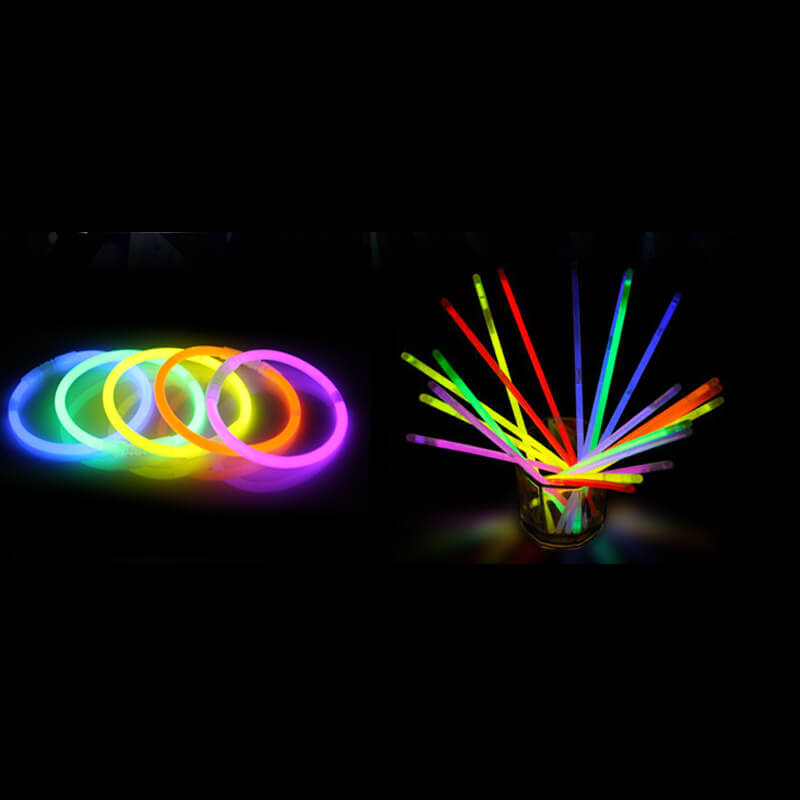
A little light can transform a venue. Glow wristbands and light sticks are among the simplest, most affordable accessories to lift atmosphere, improve crowd management and create memorable moments. This guide gives event organisers practical, safe and budget-aware ways to use glow items across festivals, clubs, corporate parties and community events.
Why light accessories still work
You do not need a huge production budget to make an area feel alive. Simple luminous items - glow wristbands, LED bracelets, glow sticks and light-up props - create instant visual cohesion, help guests orient themselves in low light and offer a tactile, shareable souvenir. They also create focal points for photography and social sharing, increasing your event's perceived value without a big spend.
Types of light accessories and when to choose each
There are two broad families of products: disposable chemical glow items and rechargeable or battery-powered LED items. Each has strengths and trade-offs.
Chemical glow sticks and bracelets
Activated by bending or snapping, these are thin tubes filled with chemicals that produce a glow for several hours. They are lightweight, cheap per unit, and easy to distribute. Typical uses include giveaways, crowd engagement and decorating drinks or centrepieces.
LED wristbands and rechargeable lights
LED wristbands offer stronger, longer-lasting light and can include flashing modes. They are reusable (depending on model), sometimes waterproof, and can be synchronised with music for high-impact moments. They cost more per unit but offer richer creative options and less waste if you reuse them across events.
Hybrid and novelty options
There are also items that combine glow elements with traditional wristbands (for entry control), light-up LED sticks shaped as batons, or small battery-powered lights that clip into lanyards or drink stirrers. Match the novelty to the audience and the message: children-focused events can benefit from playful shapes, corporate gatherings might favour more subtle LED hues.
Creative applications that deliver value
Think beyond handing out wristbands as decoration. Low-cost luminaires can be woven into operations to increase safety, pace the night and add revenue opportunities:
- Crowd moments - coordinate a mass activation at a set time to create a striking visual.
- Wayfinding and safety - use different colours for entry points, exits and first aid to help guests find their way in dark spaces.
- VIP differentiation - pair a glow wristband with a more secure wristband for VIP access, or use a special colour to indicate paid upgrades.
- Merch and add-ons - sell premium LED items as mementos or experience enhancers.
- Staff identification - use a clear, consistent light colour for crew so they remain visible and approachable after dark.
Practical considerations for choosing products
Before ordering, answer these operational questions. Your choice should match the event profile, crowd size and venue type.
- How long does the light need to last? Choose chemical glow sticks for predictable multi-hour life or LED for all-night use and repeat events.
- Does the item need to be waterproof? For beach, boat or outdoor events, waterproof LED or sealed chemical sticks are preferable.
- Is sustainability a priority? LEDs can be reused but need charging. Consider recycling plans for single-use chem glow sticks and opt for biodegradable packaging.
- Will the item form part of access control? If yes, think about pairing light items with serialised or UV-marked wristbands for better security - see our guides on numbered wristbands and UV varnish for wristbands.
- What is your budget per guest? Factor in distribution, staff time and any recycling collection points.
Activation and distribution: keep it simple
Good distribution keeps queues moving and ensures guests engage with the lights correctly. Here are operational approaches that work:
- Pre-placed packs - put a glow item on each table or seat for seated events so guests can activate at will.
- Entry handouts - pair a glow wristband with a ticket scan to ensure everyone receives one. This also removes the need for extra checks at gates.
- Staff activation stations - for LED wristbands that require switching on, have a few charging and activation points with staff to help guests.
- Timed activations - announce when to activate for key moments. A single coordinated flash is often more memorable than continuous glow.
Safety and regulations
Safety is non-negotiable. Chemical glow sticks are generally safe when intact, but the chemicals inside can irritate skin and eyes if leaked. LED devices contain batteries which can be a choking or fire hazard if damaged. Follow these rules:
- Use reputable suppliers who conform to safety standards and can provide certification on request.
- Include simple safety instructions on packs and make staff aware of first-aid procedures for chemical exposure and battery incidents.
- For family events, choose non-toxic, sealed products and avoid small battery-powered items that pose choking risks.
- Collect and dispose of used glow sticks responsibly; provide clearly labelled waste bins and consider a recycling point for battery devices.
Environmental impact and greener alternatives
Single-use chemical glow sticks create plastic waste and use chemicals. If sustainability is important, consider these options:
- Hire or invest in reusable LED wristbands that can be collected and recharged after events.
- Choose suppliers offering recyclable or compostable packaging and biodegradable sticks where available.
- Reduce quantity by using lights strategically - for example, focus on VIP areas, stages or photo zones rather than distributing to every single guest.
Combining light accessories with access control and security
Light accessories can be decorative and functional. For events requiring verified access, combine glow items with secure wristbands:
- Worn together - attach or hand out a glow bracelet alongside a numbered or tamper-evident wristband so the light is decorative and the other band manages access.
- Distinct colours - use glow colours to signal access tiers, then check the physical wristband as the secure marker.
- UV checks - if you use UV varnish or UV-visible marks on wristbands, be clear: our UV option is a varnish visible under UV light rather than a UV-printed band. UV varnish is an effective, low-cost way to add a layer of verification; see our detailed guide on UV varnish for wristbands.
- Serialisation - for higher-value access tiers, pair glow items with serialised wristbands to reduce counterfeiting. Read about preventing fraud in our wristband counterfeiting guide.
If you want to explore how light accessories fit into risk planning and entry design, our article on event security risk tiers is a practical starting point.
Distribution logistics and checklists
Smooth execution depends on planning. Here is a checklist to avoid last-minute problems:
- Order sample units early to test brightness, colour and activation before committing to large quantities.
- Confirm lead times with your supplier and factor in a buffer for delivery delays.
- Prepare clear staff briefings covering distribution points, activation instructions and safety guidance.
- Have spare stock at the gate for latecomers and replacements.
- Plan waste collection and recycling for post-event clean-up.
Cost considerations and scaling
Costs vary widely. Chemical glow sticks are usually cheapest per unit but create single-use waste. LED units cost more but can be reused and offer headline effects. Rather than buying the maximum number for every guest, consider these pragmatic approaches:
- Targeted distribution - give lights to specific groups (VIPs, performers, staff) and use visual clusters to create impact.
- Sponsorship - sell branded glow items to sponsors as visibility at a low cost.
- Staggered procurement - buy a base quantity and top up after assessing early uptake at the event.
If you want worked examples for budgeting entry and wristband costs, our modelling articles explain how volumes, production runs and security choices affect price - see how much a custom wristband costs and a sample 1,000-person entry cost breakdown.
Packaging and branding opportunities
Even inexpensive glow items can carry your brand. Consider printed sleeves, stickers or wristband sleeves that bear the event name or sponsor logo. For LED wristbands you can often request custom colours or printed clasps that reinforce brand identity.
Crowd engagement ideas using light accessories
Here are practical activations that consistently work without heavy technical setup:
- The flash moment - ask everyone to activate their light for one big synchronized flash during a headline track or countdown.
- Light-based games - run competitions where guests create patterns or group by colour for small prizes.
- Photo zones - use clusters of glow items around a backdrop to create shareable images for social media.
- Interactive performers - give dancers or roaming performers higher-intensity LED props to draw attention.
Post-event handling and measurement
After the event, collect data and the physical items where possible. Track social shares that include your lights as a way to measure engagement. If you issued serialized or numbered wristbands together with glow accessories, use the numbers for reconciliation and to detect misuses; for more on numbered wristbands and their benefits see our practical guide.
Quick operational plan - 8 steps to execute
- Define objectives - atmosphere, safety, revenue, or brand visibility.
- Select product type - chemical vs LED vs hybrid.
- Order samples and test on-site.
- Confirm supplier lead times and minimum order quantities.
- Plan distribution points and staff briefings.
- Run a safety briefing and prepare first-aid guidance for staff.
- Execute a coordinated activation during the event.
- Collect feedback and reuse or recycle stock where possible.
Common pitfalls and how to avoid them
Avoid these recurring mistakes:
- Underestimating distribution logistics - run a simple mock distribution before doors open.
- Buying the loudest option every time - sometimes subtle, slower glows look more elegant for corporate audiences.
- Neglecting safety signage - include a short safety line on packs and ensure crew know how to respond to leaks or battery issues.
- Assuming reuse without a plan - if you plan to reuse LED units, confirm collection before guests leave.
Final thoughts
Glow accessories are one of the most cost-efficient ways to enhance atmosphere, aid safety and create shareable moments. Pick the product that matches your event objectives, plan distribution and safety carefully, and consider combining decorative lights with trusted access-control methods like serialised or UV-varnished wristbands for events that need both spectacle and security. For deeper reading on entry costs and wristband security, check our practical resources on entry cost planning, preventing counterfeiting and UV varnish use for verification.
If you would like tailored recommendations for your event size, audience and sustainability goals, we can help specify product types, quantities and distribution strategies so you get maximum impact for the budget you have.
Advanced lighting choreography and timing
Well designed timing turns individual glow items into a collective spectacle. You do not need a full production rig to create synchronised effects, but a clear plan and simple technology choices will make the difference between a gimmick and a memorable moment.
Options to consider
- Manual cueing: for small venues or single flash moments, equip stage managers and front-of-house with short cue sheets. A five second countdown displayed on the sound desk is often enough to align thousands of people.
- Audio triggers: pair a clear audio cue, a single drum hit or vocal call, with a short activation period. This is robust and requires no extra tech on the consumer product.
- Wireless synchronisation: LED wristbands with radio or Bluetooth Low Energy sync can reproduce complex chases and colour fades. If you use this, test RF density in the venue and allow timecode syncing to the PA to avoid lag.
Practical choreography tips
- Design brief moments, not continuous spectacle. Peaks make better photos and memories.
- Choose simple colour palettes for mass effects. Two or three dominant colours read better from a distance.
- Test on-site well before doors open. Even a single misplaced delay can spoil a synchronised flash.
Technical specifications and field testing protocol
Before placing a bulk order, adopt a short, repeatable test plan that protects the event and the brand. The following checklist is concise but covers the points that most buyers overlook.
- Brightness and colour consistency: measure relative intensity with samples in the venue environment. Ambient lighting and stage wash change perceived brightness dramatically.
- Battery life: verify stated run time under realistic conditions. Low temperatures and continuous flashes reduce capacity.
- Ingress protection: check IP rating if you run outdoor events or wet-weather programmes.
- Activation reliability: open, close and re-open several units to confirm the activation mechanism will not fail under repeated use or by inexperienced hands.
- Wearability and comfort: straps, clasps and edges should not irritate skin. Test clasps on a range of wrist sizes and over clothing.
- Packing and spoiling risk: inspect factory packaging for protective inserts and anticipate rough handling during transport.
Run the tests in-situ if possible. Field testing gives a more accurate reading than lab conditions and helps avoid unpleasant surprises on event day.
Sustainability and lifecycle management
Light accessories are high impact visually but can be costly environmentally if treated as disposable. Build a lifecycle plan at procurement stage to align choices with your sustainability goals.
Strategies that work
- Choose reusable LED products where budget permits. Reusable units reduce single-use waste and often improve guest perception of quality.
- Implement a deposit or rental scheme to encourage returns. A small refundable deposit increases collection rates dramatically.
- Set up a take-back and recycling partnership with a local waste recycler. For chemical glow sticks, ensure a compliant disposal route that treats chemical components appropriately.
- Use minimal and recyclable packaging. Printed sleeves or compostable bags maintain brand visibility without excess plastic.
Communicate your plan clearly. When attendees understand the recycling or return process they will cooperate, and that behaviour translates into positive PR.
Supplier selection and contractual safeguards
Choosing the right supplier affects lead times, quality and legal exposure. Treat procurement like buying critical venue services, not a commodity purchase.
- Request and keep samples from the exact production batch, not just a prototype.
- Confirm lead times in writing, including penalties or contingency plans for late delivery where exposure is material.
- Specify minimum acceptable technical parameters in the contract: lumen output, battery type, IP rating, and warranty terms.
- Include a short acceptance test clause that allows you to reject a batch on-site if it fails critical tests.
- Ask about traceability and lot numbers to simplify any recall or quality investigation.
Legal, health and safety essentials
Chemical glow sticks and lithium battery powered LEDs pose different hazards. Cover the basics in both supplier documentation and on-pack messaging.
- Provide concise first-aid guidance for skin and eye exposure to chemicals and ensure crew know where the safety data sheets are held.
- Follow carriage rules for batteries when shipping by air or courier. Declare lithium batteries correctly and confirm carrier acceptance.
- Include a short safety line on handheld items: keep away from eyes, do not ingest, and return used units for disposal or recycling.
- Check local waste regulations before disposing of chemical or battery waste to avoid fines.
Measuring impact and return on investment
Lights are both atmosphere tools and measurable assets. Define two or three key performance indicators up front, and use simple measurement methods to track success.
- Social media engagement: track hashtags, photo shares and impressions that feature your branded lights.
- Redemption metrics: use QR codes or promo codes printed on sleeves to measure conversions to merchandise or sponsor pages.
- Collection rate: measure how many units are returned if you run a deposit scheme. That is an immediate indicator of both sustainability success and potential reuse savings.
- Audience feedback: short post-event polls asking attendees to rate the light experience on a five point scale give actionable data for future buys.
Staff briefing and attendee messaging - practical examples
Clear, concise communications avoid confusion and reduce staff workload on the night. Below are short scripts you can adopt or adapt.
Front-of-house staff briefing, 90 seconds
We will hand out LED wristbands at the main entrance. Make sure guested wristbands are on snug but comfortable. There will be a single synchronized flash at 21.30 during the headline act. If a guest needs a replacement, direct them to the information desk. Do not attempt to repair broken units. Any battery leaks to be handed to security in a sealed bag with details recorded.
Attendee instruction example, printed on sleeve
How to use: press the button once for on, again to change modes, long press to turn off. Keep away from eyes. Return used bands to the collection point by the exit for recycling.