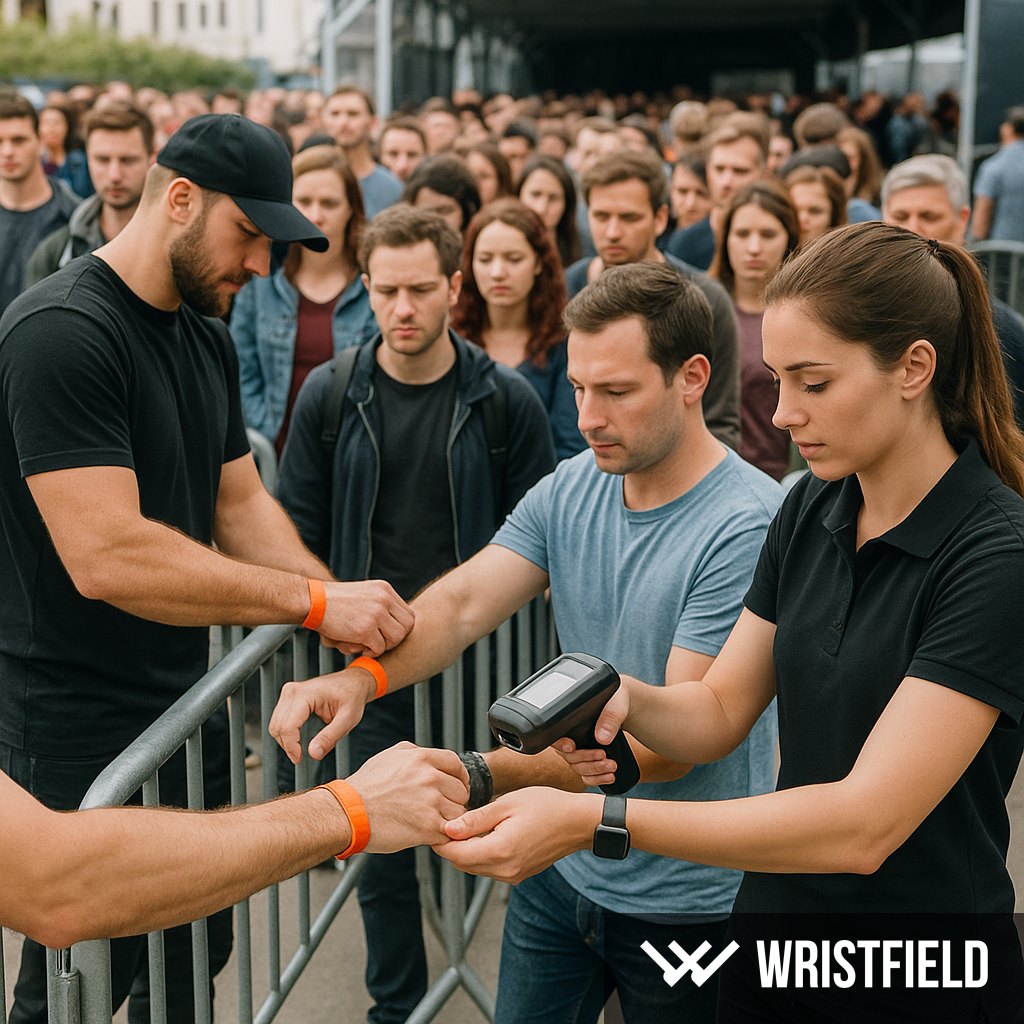
The psychology of high-volume entry
When hundreds or thousands queue to enter an event, the task is not only to move people through gates but to shape how they experience that wait. Clear visual cues, simple decision points and well-managed staff rotations can reduce disputes, speed throughput and protect front-line teams from fatigue. This article brings together operational techniques, capacity thinking and behavioural insight so you can plan entry that feels fast and fair.
Why entry is a psychological as well as operational moment
Entry is often the first physical interaction guests have with an event. It frames expectations. A tidy, transparent queue signals control and reduces anxiety. A chaotic, opaque queue increases frustration and the chance of conflict. Successful entry design therefore combines operational capacity with behaviour-led interventions that influence perception and behaviour without adding complexity to staff tasks.
Tuning the queuing experience
People judge waiting time by what they see and hear as much as by clock time. A visually ordered queue, regular updates and small comforts can make waits feel shorter. Conversely, a long, tangled line or unclear progress cues elevates stress and increases the number of enquiry or complaint interactions your team must handle.
Practical measures that improve perceived waiting time
Design visible progress. A serpentine queue can reduce apparent length but depends on available footprint. Wherever possible align sightlines so people can see the entry point and how fast the line is moving.
Communicate constantly. Short, factual announcements about estimated wait time and progress reduce guessing and complaint behaviour. Punctuate updates with friendly staff presence.
Provide small distractions. Informational boards, schedule highlights or site maps in the queue reduce the salience of waiting. For longer waits, consider light entertainment or content relevant to the event.
Visual cues and simple decisions
People make faster, more consistent decisions when visual cues are unambiguous. Use colour, clear signage and consistent wristband treatments to give both guests and staff immediate, low-effort checks. The simpler the decision, the faster the throughput and the lower the error rate.
For example, distinct wristband colours or numbered bands help staff instantly confirm entitlement without lengthy checks. Numbered wristbands also support accountability and post-event reconciliation. For more on how numbered wristbands can reduce disputes, see our practical guide How Numbered Wristbands Work at Events.
UV varnish is commonly used as a fast, objective verification step. This is a varnish that becomes visible under a UV torch rather than UV printing. In a disputed case a supervisor can shine a UV torch and confirm a varnish pattern within seconds. For a dedicated operational overview and cost-risk thinking on UV varnish, see UV varnish for wristbands: a practical guide.
Designing for quick decisions in practice
Every extra question at entry adds handling time and the potential for mistakes. The guiding principle is to reduce decision points to binary checks where possible: accept or reject. Use layers of checks so deeper scrutiny is only needed in the minority of cases.
Tools to simplify decisions
Pre-printed wristbands and pre-distributed tickets remove search time at the gate. Express production options are useful when last-minute runs are needed; see our note on When Is Express Wristband Production Worth It?.
One-glance checks. Ensure wristbands and instructions are harmonised so staff can adjudicate visually. Features such as bold colour bands, high-contrast printing and UV varnish minimise ambiguity.
Tiered checks. Use a rapid visual lane for straightforward entrants and route only problematic cases to a secondary inspection lane. That prevents a small number of disputes from slowing the whole operation.
Perceived capacity and real throughput planning
Distinguish between objective capacity and perceived capacity. Objective capacity is derived from staff performance and equipment. Perceived capacity is how guests feel about flow. Both matter: perceived bottlenecks drive complaints even if technically you are within capacity.
A practical example helps. If you need to admit 3,000 people over two hours that gives an average of 1,500 entrants per hour. If a single lane handles one entrant every 10 seconds on average, that lane processes about 360 entrants per hour. Under these assumptions you need at least four lanes to meet the hourly rate with some operational margin. For a worked cost and staffing model for a 3,000-person event, review our case study 3000-person concert cost model.
Staff stress, error reduction and simple protocols
Staff are the single most important factor in maintaining throughput and reducing disputes. Fatigue and uncertainty increase error rates. To protect staff performance use concise protocols, sensible shift lengths and frequent rotations.
Operational steps that reduce errors
One-page decision cards. Each entry point should have a single-sheet playbook covering common issues: missing wristband, suspected counterfeit, lost ticket, medical exemption and the escalation path.
Short, frequent shifts. Experience shows error rates rise after about 90 to 120 minutes of continuous work. Implement rotations such as 90 minutes on, 30 minutes off during peak periods.
Live simulation training. Practice the busiest scenarios with the real team before doors open. Walkthroughs reduce friction and make escalation smoother.
Common planning mistakes and how to avoid them
Organisers often plan for average demand without reserves, choose wristband materials unsuited to the environment, or omit anti-counterfeit measures. These oversights create queue extensions and increase staff workload.
For example, selecting a low-cost wristband for an outdoor, wet festival can lead to failures and more on-the-spot replacements. Material choice should match conditions and the required level of security. See our comparative guidance on materials when choosing wristbands.
A practical sizing table
| Event size |
Recommended entry strategy |
Suggested wristband types |
Typical lane and staff |
| 0-500 |
Simple desk entry with hand checks, 1-2 lanes |
Tyvek or basic fabric; consider numbering |
1-3 entry staff, 1 supervisor |
| 500-2,000 |
Multiple lanes, pre-distributed wristbands |
Tyvek or vinyl; numbering and UV varnish considered |
3-8 entry staff, 1-2 supervisors |
| 2,000-5,000 |
Pre-printed wristbands, multiple lanes or electronic gates |
Vinyl or fabric with serialisation and UV varnish |
6-20 entry staff, 2-4 supervisors, reserve team |
Concrete planning examples
Two practical, conditional examples illustrate how to translate these principles into staffing and layout decisions without assuming specific prices.
Example A - 1,000 guests in one hour
The average handling time is assumed to be 8-12 seconds per person. A single lane at 10 seconds per person processes about 360 people per hour. To meet 1,000 entrants in one hour you need at least three lanes in continuous use, and ideally a fourth lane as a reserve to handle disputes and absences.
Example B - 3,000 guests over three hours
Average hourly throughput required is 1,000 entrants. At 10 seconds per person, a lane processes approximately 360 entrants per hour. Practically, plan for 4-5 lanes including one dedicated escalation lane. That provides margin for slower-than-expected handling and quicker resolution of disputes. For a full worked model and staffing cost examples, consult our 3,000-person event guide 3000-person concert cost model.
Decision logic for choosing lanes and wristband types
Weigh three factors together: throughput, cost and security. If budget is tight, you may accept more manual checks and longer queues. If security and guest experience are essential, invest in more robust wristbands and reserve staffing to preserve lane speed.
- Set the admission window and identify peak arrival periods.
- Measure or estimate average handling time using realistic trials.
- Calculate required lanes: lanes = expected guests / (lane capacity per hour * hours available).
- Choose wristband material, serialisation and optional UV varnish based on fraud risk and environment.
Reserve planning and on-call problem teams
One frequent mistake is underestimating the need for reserves. A single problem lane or a lost supply of wristbands can cascade. Keep a small mobile problem-solving team on-call to intervene within 20 minutes on complex cases, and maintain a secure reserve of wristbands equivalent to 5-10 percent of expected attendance.
Staff rotation and the operational model
Design shifts that preserve attention and decision quality. Rotations such as 90 minutes on with a 30-minute break are effective during peak periods. Ensure at least one senior supervisor is present on every shift to support escalations and maintain consistency in rulings.
When a higher-quality wristband pays back
Ticket cost per unit is not the only metric. Cheaper wristbands can increase the volume of disputes and replacements, which lengthens queues and raises staff costs. When fraud risk or brand experience is important, a slightly higher per-unit cost for a more secure wristband is often justified by lower operational disruption and fewer complaints. For a deep-dive on unit cost trade-offs and when express production is worth it, see How much does a custom wristband cost? and When Is Express Wristband Production Worth It?.
UV varnish in everyday operations
If you use UV varnish, ensure supervisors and relevant staff understand it is only visible under UV light. Provide each supervisor with a UV torch and a sample band from the batch for cross-reference. Use UV checks only as a secondary measure in disputed cases, not as a primary screening method. For a practical guide to UV varnish deployment, see UV varnish for wristbands: a practical guide.
Checklist for your next event
Before your next event, run these quick tasks:
- Measure handling time in a small test run and calculate lanes from that data.
- Prepare one-page decision cards for each gate and a supervisor escalation path.
- Allocate a mobile problem-solving team and a secure reserve of wristbands (5-10 percent).
- Plan staff rotations and schedule supervisors to overlap during arrival peaks.
- If using UV varnish, distribute UV torches and sample bands to supervisors for verification.
Final thought
High-volume entry is at once an engineering and a behavioural challenge. Where you align clear visual cues, simple decision rules and staff welfare, you create an environment that moves people efficiently while reducing conflict and errors. If you would like a tailored capacity calculation and a short staffing-rotation plan for your event, we can prepare that based on your attendance profile and site constraints.